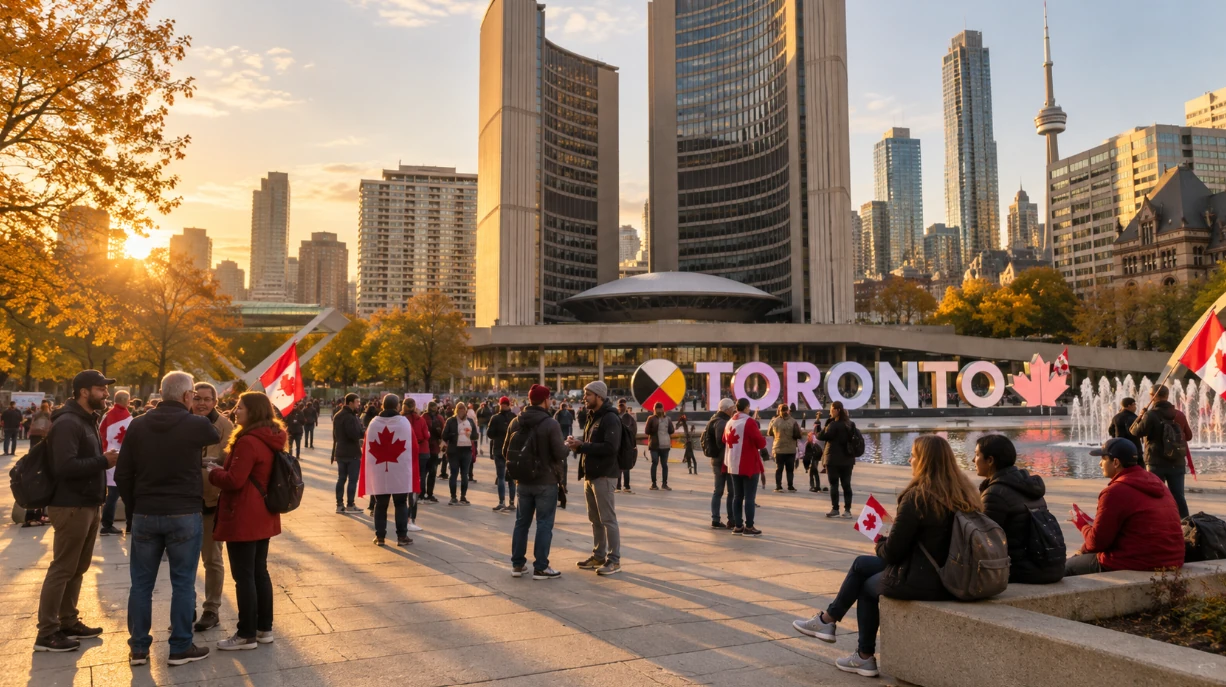
A city-wide conversation can feel distant until someone asks about the park at the end of the street, a place to meet or an activity neighbours could share.
For a reader wondering how to take part, scale is a useful starting point. You do not need to speak for an entire neighbourhood. Begin with something you have noticed, describe it clearly and leave room for other people to describe the same place differently. A question that is specific enough to discuss is easier to follow than a promise to solve everything at once.
Start with the place, then ask who uses it.
Consider how the place fits into an ordinary day. Who visits, who passes through and who might find it difficult to use? These are prompts for listening, not conclusions about a community you have not consulted. Ask people about their own experience and avoid treating one conversation as a complete picture.
When you want to connect a local idea with an appropriate resource, the City’s community-initiatives pages offer information about resident-led activity and community support. Its Community Development Officers directory can help identify relevant City contacts for neighbourhood planning and related work. Neither a conversation nor a directory listing guarantees a project will proceed.
Official sourceCity of Toronto — community initiatives
Official sourceCity of Toronto — Community Development Officers
Make the first step small enough to describe.
There is a difference between a broad aspiration and an activity somebody can understand. “Help our neighbourhood feel more connected” is an aspiration. Reading an existing notice, asking about an accessible meeting place or checking who is responsible for a local question can be a first action. Agree on what the step is meant to clarify before assigning anyone work.
For park-based ideas, Toronto’s Together in Parks resources describe ways residents and groups can explore community activities, clean-ups and stewardship. The City uses its own intake process, and support depends on capacity and priorities. Some activities need permits or other approvals. Check the guidance for the idea you have in mind instead of assuming that a public location is available for an organised activity.
Official sourceCity of Toronto — Together in Parks
Choose a role that fits your time.
Participation can involve listening at an event, helping with a defined task or reading material before the next discussion. Ask what the role involves, who will explain the task and what commitment is expected. A clear, limited contribution is often more useful than agreeing to something you cannot sustain.
The City lists volunteer opportunities in areas such as recreation, stewardship and cultural events. The available roles depend on programme needs and the time of year, so check the individual opportunity for current requirements. This journal does not recruit volunteers or process applications.
Official sourceCity of Toronto — volunteer with the City
Give a conversation enough room.
Before a discussion, ask what is already decided and what is still open. Those two answers help people use their time well. During the conversation, distinguish a personal experience from a claim about everyone else. If a practical need is raised, record the question accurately rather than promising a solution on another organisation’s behalf.
Small learning settings can be useful too. Toronto Public Library’s event directory includes conversation circles, civic and community engagement and other programmes. Read each listing carefully: audiences, formats and registration arrangements differ. A library event is its own activity, not an endorsement of this publication or any group mentioned by a participant.
Official sourceToronto Public Library — find an event
Illustrative neighbourhood scenario
One idea, one sensible next step.
Imagine a few residents interested in a shared park activity. Before announcing anything, they read the relevant City guidance, identify a contact and ask about the appropriate process. They discuss what they can reasonably contribute and what remains unconfirmed. This is an example of preparation, not a scheduled event or an offer to organise one.
Leave a useful record of what follows.
After a discussion, write down the question, the next action and who has agreed to check it. Ask permission before sharing somebody else’s contact details or attributing a remark to them. A concise, accurate note is more helpful than a sweeping claim that the neighbourhood has reached a common view.
Community life also leaves room to observe without taking a formal role. Read, return to the subject when you can, and make commitments deliberately. The point is to find a useful relationship with the place and people around you.
Prepare for a community visit ↗